Lauryn Hill Some Beef Patties and Some Coca Bread
LAURYN HILL / "Every Ghetto, Every City"
The Random Business firm lexicon defines nostalgia as "a wistful desire to render in thought or in fact to a onetime time in one'south life, to one'southward home or homeland, or to one's family unit and friends; a sentimental yearning for the happiness of a former place or fourth dimension." Take a close listen to Stevie Wonder's "I Wish" and it'due south as if Stevie wrote the tape with the definition in mind. 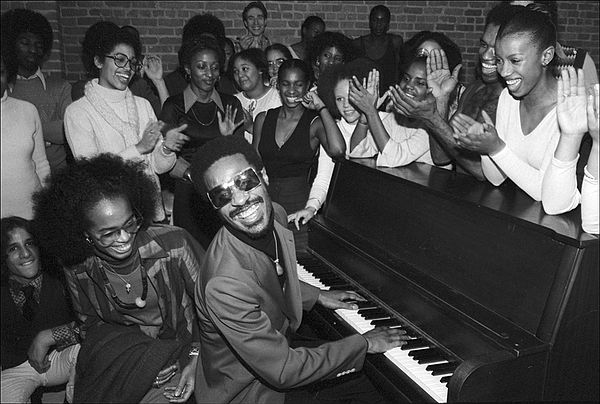 Certainly, at that place were cornball records before "I Wish," but Stevie's tape fix a new standard and in the process created, or at least publicly best-selling, a new type of nostalgia. Stevie'southward nostalgia wasn't a general homesickness and information technology wasn't a vague feeling of wishing he could be young again. Stevie's nostalgia was more specific than that. It was the nostalgia of blackness man who'd achieved every ghetto kid'due south dream of making it out, yet paradoxically found himself wishing that he could exist right back in the same identify and time from which he'd worked and then hard to exit. Of course, ane doesn't have to be black, famous or from the ghetto to sympathise Stevie's sentiments. Afterward all, the song was a major hit on both pop & R&B radio back when information technology was first released and it remains popular across various demographic lines today, more than thirty years after. The universal appeal of "I Wish" can't exist denied. Just the song also includes specific cues, examples and descriptions that are instantly recognizable to those of u.s. who do happen to exist black and who did happen to abound up in the ghetto. Over the years, Stevie's tape has become a model for like songs. Modernistic-24-hour interval singers and rappers follow Stevie's example in both style and content, fashioning their own nostalgic remembrances of their ain days of old. If it sounds at times similar the newer songs are near-rewrites of "I Wish," it's because "I Wish" itself has become an object of nostalgia. When adults of my generation call up growing up in the ghetto, "I Wish" is part of their mental soundtrack.
 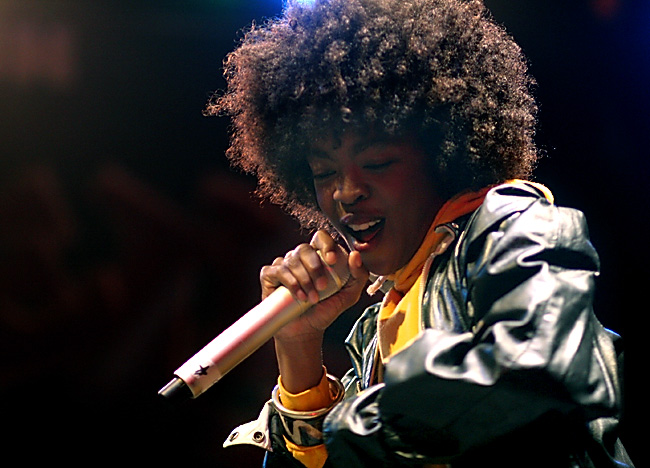 The outset "I Wish" tape I recollect hearing is Lauryn Hill'southward "Every Ghetto, Every City." The chorus of "Looking dorsum / looking dorsum / looking back" is a witting nod to the opening words of "I Wish," as is Lauryn'southward description of herself as a little girl. Lauryn from "Every Ghetto":
I was just a little girl Skinny legs and printing and curl My mama always thought I'd be a star…
Stevie from "I Wish":
Looking back on when I Was a niggling nappy-headed boy Then my only worry Was for Christmas what would be my toy…
With Stevie'due south words in mind, Lauryn is recalling the days before she was supermodel pretty, world famous and monetarily fortunate…and, allow's not forget, saddled with all the complications that come along with such 'expert' fortune. Using the same descriptive, list-like structure that Stevie used for "I Wish," Lauryn waxes nostalgic for the food (twenty-five cent numberless of processed, Springfield Artery popsicles, Jamaican beef patties and coco breadstuff), music (Doug E. Fresh & Slick Rick, "Self Destruction," "Jack Your Body," Biz Markie) and fun childhood activities (dance classes, foot races in the streets, riding bikes, doing the whop) of her younger days in 'New Jerusalem' AKA S Orangish, New Jersey. 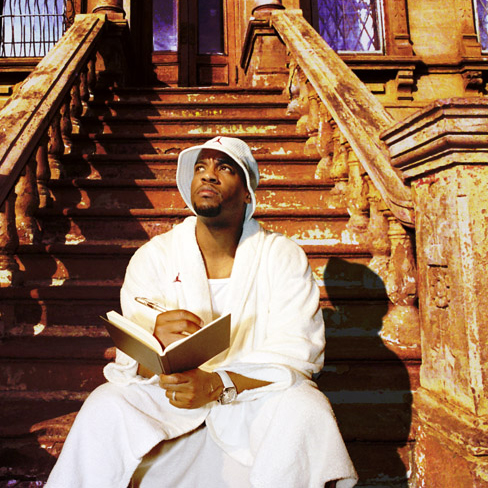 Staying with hip-hop for a minute, we get Masta Ace'due south "Survival," a record and then suffused with nostalgia that the chorus features a snippet of vocals sped up to sound like children'due south voices while the beat could've been sampled from an ice cream truck. Self-deprecation is a virtual obligation of "I Wish" records and in his opening lines Ace obliges, remembering how he used to spend his summers dirt-fighting with his friends and "running through the streets smelly." And virtually his teenage years, Ace recalls that he "couldn't get the shit that some got," because he "didn't sell crack rock" nor did he have "a wicked jump shot." Instead, he got a summertime job "sweeping and mopping." But if y'all listen betwixt the lines, you lot'll realize that all of Ace'due south manual labor eventually led to his being able to purchase music equipment and to a successful career doing something he loves. And just every bit Lauryn cautions well-nigh the end of "Every Ghetto," "Don't forget what you lot've got," Ace ends "Survival" with, "Don't ever forget how it was without." Ace's words make me think of a book I'm currently reading called The How of Happiness , in which the author, Sonja Lyubomirsky, attempts to requite the reader measurable, proven methods of increasing their daily and long-term happiness. Throughout the volume, Sonja talks about the concept of gratitude and the ability of positive, optimistic thinking. "Gratitude," Sonja says, "is an antidote to negative emotions, a neutralizer of green-eyed, forehandedness, hostility, worry and irritation." Songs similar "Every Ghetto" and "Survival" are not only about nostalgia for the pleasures of the past, they're too about gratitude for the blessings of the present – no wonder I feel happier when I hear them. The author likewise talks nigh nostalgia. I've usually thought of nostalgia as a bittersweet emotion, at best. Sometimes, I've even thought of it as a negative emotion – one that tin cause the nostalgic person to experience worse because their nowadays days don't and can't measure up to the fun, innocence and full general gloriousness of the olden days. Only via years of research, interviewing and studying "happy" people (and Sonja defines happy people simply as those who consider themselves happy), Sonja concludes that nostalgia "is actually a positive emotion, albeit a poignant one." The How of Happiness helps explicate why songs like "I Wish" make people feel and so good.
  Mos Def's "Habitat" is some other hip-hop record that fits the bill. It's got the same uptempo, danceable feel as the others, the same cornball tone and the same descriptive style of lyrics. Mind to Mos talk about his younger days in Brooklyn and you get the feeling that he, Ace and Lauryn could've grown upward on the same block:
When I recollect of home, my remembrance of my beginning Laundromat, helping Ma Dukes fold the bed linen Chillin' in front my edifice with my blood brother and them Spending nights in Bushwick with my cousins and them Wild Style and Beat Street / Federal relief Slowly melting in the morning grits we used to eat Sticking to your teeth and teeth is hard to keep With every flavor Now & Later only a dime apiece
And so far, we've talked about a soul legend from Detroit and iii MCs from the East Declension. Now let's had some global flavor to our theme. Two young Afro-European singers that Kalamu likes have washed their own "I Wish" records. (And at different times over the terminal couple of years, Kalamu has posted both songs.)  Straight out of Berlin, Frg, Joy Denalane'southward "Born & Raised" describes memories such equally "playing dodgeball up against the Berlin Wall" and hanging out with black GIs. While I can't relate to that at all, Joy's remembrances of sporting Adidas sneakers, listening to Public Enemy LPs and leaving home for skillful at the age of xvi could be taken straight out of my life. Over again, y'all can hear Stevie's spirit and mode in the grooves of Joy's melody.
  West Yorkshire (England) native Corinne Bailey Rae uses some of Stevie'south "I Wish" vibe to spice up her cornball love song "I'd Similar To." Lying in bed with her man, Corinne tells stories about a smiling neighbour billowy a infant on her articulatio genus, a friend named Rhea sitting on the front step "getting her pilus combed out and greased" and street parties where she used to drink rum and punch from plastic cups and swallow craven "hot and sweetness." This song is a fine example of nostalgia being used for a positive purpose. What amend time is there to reminisce about the practiced ol' days than when yous're with somebody you lot beloved? Other than what's actually on these records, I don't know anything almost growing upwards in either Deutschland or the UK – I've never been to either country and it'll probably be a while before I finally do go – only as I listen to Joy and Corinne do their affair, I detect myself comparing their words to those of Ace and Lauryn, and of course to Stevie's too. Listening to all of these songs, it occurs to me that some feelings must be universal. There must be something in us all that misses the fashion things used to exist (or at least, misses the way we remember things being).
 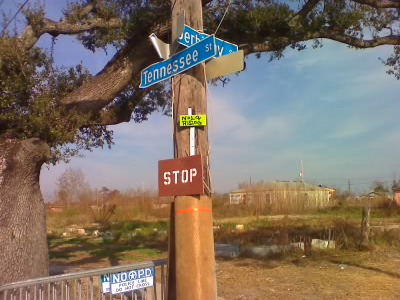 Just the other day, I was downloading pictures from my cellphone of my last trip to New Orleans and I came beyond a movie I didn't recall taking. It was the street sign from the corner next to the little firm I grew upward in. The house is gone now, courtesy of Ms. Katrina. On the physical slab where the firm used to be, there sits one of Brad Pitt'due south geometrical light structures that he put up to stand for families driven out by the storm. The street signs reads 'Tennessee' and 'Derbigny.' Unless you happen to exist from my block of the Lower Nine in New Orleans, the sign won't mean anything to you lot. Merely looking at the picture though, I know why Lauryn, Ace, Joy and Corinne wrote their tributes to Stevie. Sometimes I wish those days could come up back too. Have a trip down memory lane: - Stevie Wonder's "I Wish" – From Songs In The Key Of Life (Tamla/Motown, 1976) - Lauryn Hill'southward "Every Ghetto, Every City" – From The Miseducation Of Lauryn Hill (Ruffhouse/Columbia, 1998) - Masta Ace'south "Survival" – From Hits U Missed, Vol. 2 (Promo Only, 2005) - Mos Def'due south "Habitat" – From Blackness On Both Sides (Rawkus, 1999) - Joy Denalane's "Born & Raised" – From Built-in & Raised (Four Music, 2007) - Corinne Bailey Rae's "I'd Like To" – From Corinne Bailey Rae (EMI, 2006) —Mtume ya Salaam The Ghetto Hither we go once more. Once upon a time, the ghetto was a community. I am convinced that is what we miss: community. (Customs = a state of place and existence where people share views and values.) Permit me explain through two songs.
 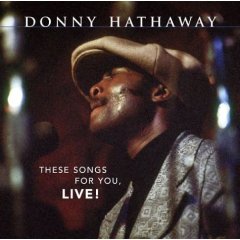 "The Ghetto" by Donny Hathaway; not the original from his album Everything Is Everything nor the famous "edited" handclapping i from Live (recorded in 1972 at the Troubadour in Hollywood and at the Bitter End in New York City) but the long, unedited version from These Songs For Y'all: Alive , a posthumous release of previously unavailable (or unedited) concert performances on which Donny and h is band take the vocal at a faster tempo than the studio version and with definite jazz overtones but maintain the party spirit nonetheless. The party spirit: when and where we had fun. We danced 'til nosotros dropped, literally. Squeezing six or seven on a sofa built for four or leaning on the railing on the porch besides tired to go another further or fifty-fifty laying postrate on the floor (partly clowning about how tired nosotros are and partially needed a few moments to take hold of our breath). Oh those days of unadulterated, youthful joy. Man. This twelve-minute version captures that spirit perfectly. Yous tin hear information technology: hear the audience urging the musicians on, responding early with a thunderous 'soul clap' (usually the soul clap was the climax of the song but this time, this time they started where nigh songs stop), and of course there is the conga solo and then a reprise of the soul clap this time with staccato ring accompaniment and a choral breakup. Man. Can there exist any doubt that this "ghetto" was a place of the most intense joy! Despite all of the negatives—and there were a ton of negatives—for us the essence of the ghetto was that the ghetto was a womb, a place that gave u.s. nascency, gave us identity, a place of ultimate satiation in that emotionally nosotros got all that nosotros needed. Or some such. What I know is that in New Orleans today, post-Katrina, the joy of the ghetto, our neighborhoods are gone. Joy still lives hither but not like before. Joy has inverse. Or something. It's hard to talk/write about it off the pinnacle of one'south head considering the truth of the ghetto resides in the cadre of one'due south heart. An joint of what is lodged there is elusive. Which brings me back to Donny—you hear it in his song. You hear that the ghetto his music celebrates is a beautiful place of dear and happiness, of dancing joy and glee-filled shouting.
  The second song is much, much further away from our solar day-to-day realities. Information technology's by a German-based duo, Tok Tok Tok, whom we've written about before. On 50 Ways To Leave Your Lover they cover Stevie Wonder'due south "I Wish." I only find it interesting that i sings and the other beatboxes and overdubs a tenor sax; and they make it sound like they are doing their matter. The lyrics are not nigh Europe. Beatboxing comes specifically from American ghetto streets. What gives? How is it they relate so thoroughly to this? I call up what Tok Tok Tok is digging, and what the whole world digs, is the emotion: ghetto sweetness is a dearest that all humanity loves to taste, all humanity tin relate to. Information technology's the literal joy of life expressed in all its goodness despite whatever meanness there may be. And with that, I return into the reminiscent shadows of my own memories and leave y'all to yours. —Kalamu ya Salaam
This entry was posted on Monday, June 30th, 2008 at 12:00 am and is filed nether Contemporary. You can follow any responses to this entry through the RSS ii.0 feed. You tin can leave a response, or trackback from your own site.
Leave a Reply
| top |
Source: http://www.kalamu.com/bol/2008/06/30/lauryn-hill-%E2%80%9Cevery-ghetto-every-city%E2%80%9D/
Belum ada Komentar untuk "Lauryn Hill Some Beef Patties and Some Coca Bread"
Posting Komentar